
We can’t change circumstances, but we can change our approach to them.
It's early on a Tuesday morning in my classroom. Quiet music and dim lights set the tone as students enter with breakfast. I greet scholars and remind them to place their homework in the bin as my phone pings with messages from parents. Some still need the code for Class Dojo, while others request that I check for the jacket their child left behind the day prior.
One student stands at the door, upset. Two other students raise their hands because they forgot to grab milk. Another student signals for paper towels because their milk spilled across the desk. Soon a call from the office comes with a reminder about attendance which I enter as I try to console the other scholar still at the door.
Then, I redirect the scholar to put the broom away because they do not need it after wiping up milk. After that, I ask another scholar why they are coloring with a regular marker on their dry-erase board (and why they have their dry-erase board out in the first place). We will have to deal with that later.
Time indicates that Morning Meeting is starting, and if an unexpected observation occurs, I must adhere to the schedule. I finally convince the scholar to enter as I notice another with their hood on and head down. With the pressure of pacing, I decide to push forward and check in with them during the next brain break.
During this check-in, they do not respond. I encourage the student to move their body to help them wake up. When the brain break ends, our Read Aloud block begins. As I see the door open, I realize an unexpected observation will too.
The same scholar returns to their position before, head down and hood on. Other students in the class continue to sing and laugh about the dance video that is now over. I feel the frustration rise, and it is only 8:30 am. Dismissal is not until 3:45 pm.
I share this context to give a glimpse (I am leaving out about 18 other potential scenarios) of the stress teachers encounter before the school day starts. In a single situation, the student with his head down and hood on appears like a small feat that someone can resolve. Combined with the other areas that required my attention, the resulting stress leaves me with the choice to either manage or connect.
Manage would mean issuing a consequence (I tried checking in with you, but you were unresponsive!). At the same time, connecting looks like finding the root since participating in a brain break was not. For example, "I notice you put your head back down after the brain break. What's going on? Are you tired? Hungry? Feeling upset?"
It took repeated attempts (over multiple days) to identify what that particular scholar needed. After a few tries and suggestions, they finally admitted that they were still hungry at this time in the morning. Again, another opportunity to choose between management or connection.
Management would mean breakfast time is over, so you cannot get another one during Read Aloud. Connection looks like writing the scholar a pass to retrieve another breakfast; that way, their hunger does not distract them from learning during Read Aloud.
This situation around breakfast reminds me of another quote I use to ground myself as an educator:
"Effective supervision and administration are to be directed toward the creation and maintenance of good schools. In turn, good schools are defined as those in which all efforts are made to support the needs of students. Too often, schools are operated as if the most important objective is to coerce students into complying with the expectations of the school."
-John C. Daresh
In my opinion, complying with the school's expectations means choosing conformity or the norm. This norm can exist on a smaller scale, like having all scholars throw away their breakfast once the timer goes off or immediately waking those that attempt to sleep during the school day. These expectations later turn into taking away recess for not following directions during the transition or even issuing a suspension that prohibits a scholar from entering the building.
When I have just handled about 22 situations, an observation is about to occur, and a student has their head down and hood on, I have two options.
One, I can react:
"What's wrong with you? You had breakfast already, the timer went off, and we are about to start learning!"
Two I can respond:
"Yes, go get another breakfast," while simultaneously thinking, "Why are you still hungry?"
The first does not address a need, while the second one does. The latter, seeking to understand what a scholar has been through, is trauma-informed work. It's where we attempt to learn scholars' whole stories so we can make all efforts to support their needs. It's when we choose connection over conforming to the precalculated expectations of the school day.
Some days I react. However, the same student with their head down and hood on was later passing two reading levels and sharing their math strategy in front of the entire class. Would he have done that if he was still hungry? I can't change when my students are hungry, and I sure can't change whether the school breakfast satisfies that hunger or not. I also don't know when they ate last before entering the building that morning.
We can't change circumstances, but we can change our approach to them. When we approach them to seek connection, we choose the relationship, and the relationship will have a far more lasting impact than a rule ever will.
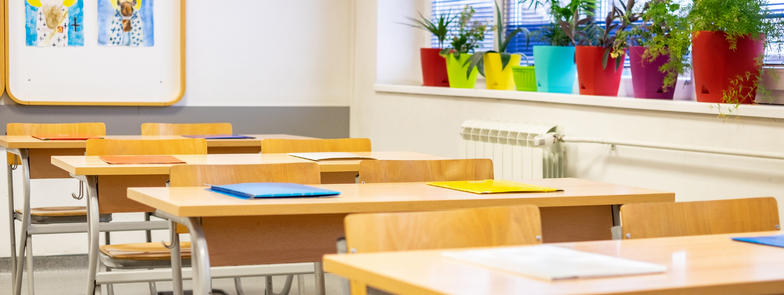
Take this belief on classroom management and switch it to a belief on classroom connection.
Seeing our students centers on what we believe about our students. Before I dive into anything actionable that you can do in your classroom tomorrow, we have to start with how you are walking into that classroom tomorrow. Personal biases, beliefs, and experiences influence our approach to not only teaching but, more importantly, the interactions we have with our students. These stem from mindset.
When I think about my first year of teaching, I imagine a roller coaster. No, not the moment when you reach the top and are about to free fall, but the moment when you are upside down in that loop. So yeah, my mindset was also upside down, and it remained that way until I moved back home to New Jersey and began engaging with the work I share with you now.
I transitioned to another KIPP School in Newark. People told me if I could teach in New Orleans, I could work anywhere. I expected my roller coaster ride to be much smoother, but I was wrong. I went from 22 students with a co-teacher for half of the day to 30 students with a co-teacher for one block of the day, which was also the grade level substitute. Then, on the first day of school, I met (changing their name) Terrell.
While Jarnell was “busy” in ways that influenced his focus, Terrell outwardly exhibited behaviors that impacted not only himself but the rest of the class. When frustrated, he would walk out of the classroom without permission. If redirected, he would talk back. During a misunderstanding with a peer, he would throw items or punch them. Moments of discouragement resulted in uncompleted work.
These behaviors repeatedly happened throughout the day. It disrupted our routine to the point where I would reward the class separately for ignoring him and staying focused on the task. It also disrupted Terrell’s routine. From August to November, the school suspended him for three or more days each month (we’ll talk about suspensions in a later post).
Seeing Terrell stemmed from what I believed about him, and with the graduate coursework I was completing, I began to understand that his actions were communicating unmet needs. I also recognized that I was a new adult in his life that needed to gain his trust and develop a relationship. So, I did what I knew best then and just started talking to him.
Terrell stayed in the classroom during enrichment blocks to help with extra tasks. Slowly, he started to tell me about his life, from where he lived to the family members that were important to him. Without sharing specific details of his life story, I can tell you that he carried much more than his backpack walking into the school building daily. Most importantly, I saw Terrell in a new light and shifted my beliefs about the behavior I had been taking personally in class.
I also discovered more about his goals. He shared about playing basketball and how he wanted to make it to the NBA one day. When he did, he would buy a mansion for his mom, aunt, cousins, etc., to live together and not have to pay for a thing.
As a result of this, our interactions in the classroom began to change. When he was visibly upset, I would self-regulate by asking him, “Wait, are you yelling at me?” He would pause and respond in a much different tone, “No, Ms. Luciano, I’m not. I’m just mad about what they said at lunch.”
As he remained in the classroom more, I discovered what interested him. When we read about Martin Luther King Jr., he eagerly raised his hand to share additional facts he knew with the class. We even implemented a basketball token board to reward his positive choices.
In full transparency, my talking to him during Enrichment blocks was not the solution. There were even days I was so frustrated that I sent him to art or music anyway. However, it created moments of connection that translated to smaller moments of progress.
It took us until February of that school year to establish a foundation of trust with one another. Then, we went home for what we thought would only be two weeks in March. The pandemic forced us to transfer our relationship to a Google Classroom for the remainder of the year. Then, the following school year, he had to start over with a new teacher on a Zoom screen. Then, the next school year, he again started with a new teacher.
My first year in education (and the few after) was an upside-down roller coaster because I had no classroom management. And as a teacher, you become focused on this term until someone else deems you have it. Across school buildings, teachers discuss well-managed classrooms versus those that are not. It is even a part of your evaluation. Observers calculate how many students are on task, how the teacher responds to misbehaviors, etc.
While it is important, Terrell taught me that my role is not to manage children but to connect with them. A clear direction with movement, participation, and voice or routine for our Reader’s Workshop block would not alter the unmet needs he was communicating through his actions. As educators, we must take this belief in classroom management and switch it to a belief in classroom connection.
Seeing our students centers on what we believe about our students. That narrative confronts them whether we realize it or not. I have been in conversations where I heard, “Oh Terrell, he’s different.” And yes, as a teacher, you have to vent. You have to laugh about some of the things you experience daily. I have my share of stories.
However, I also must stop, step in and say, “Yes, Terrell is challenging, and are you also aware of anything he’s been through?” If you knew his experiences, you would believe what he knows to be true about himself: he is strong. Like our students carry personal experiences with their backpacks each morning, we bring personal beliefs with our coffee.
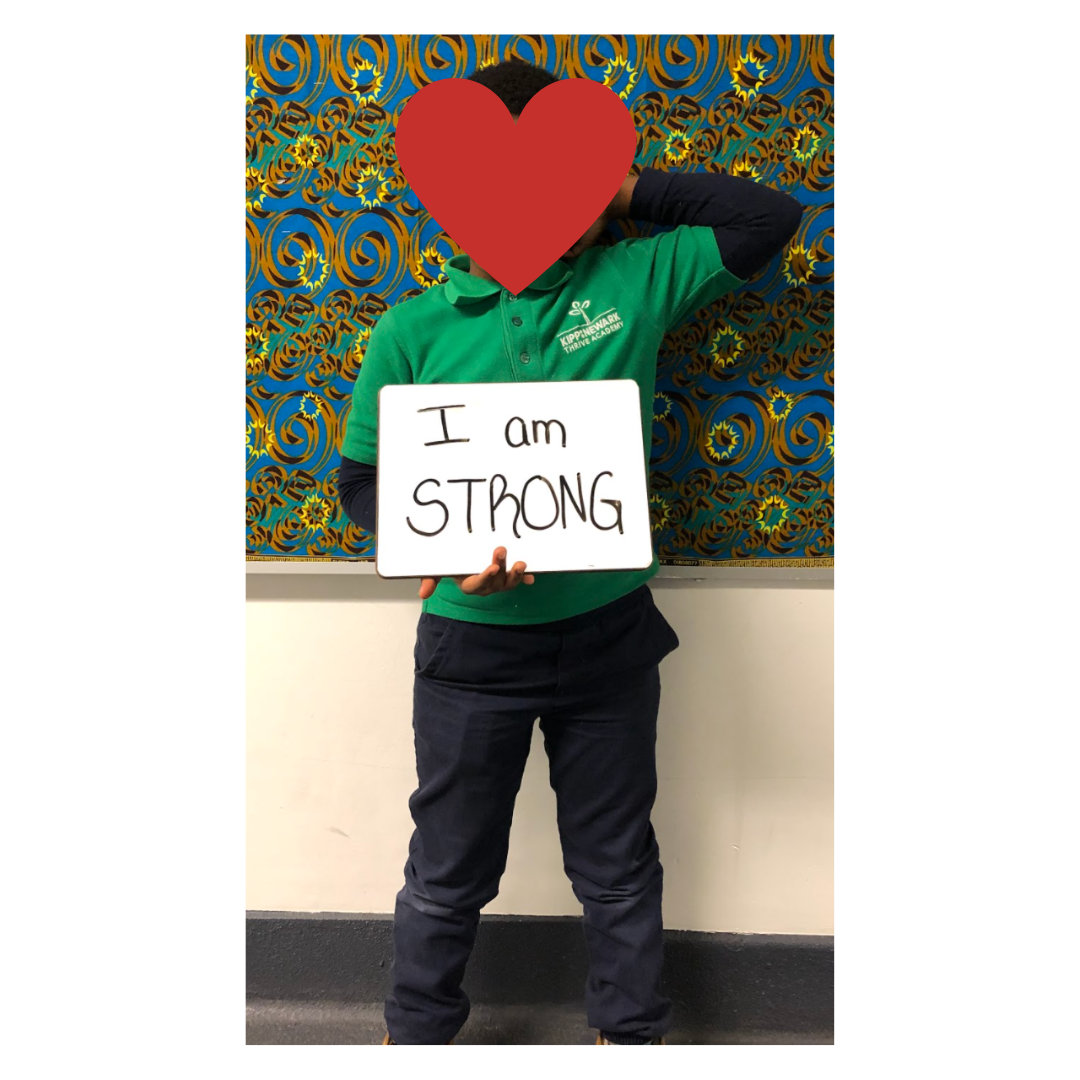
Therefore, in my opinion, a well-run classroom is not led by an adult that can manage effectively but instead, an adult that connects intentionally.
That leaves us with classroom management or classroom connection - what do you think?
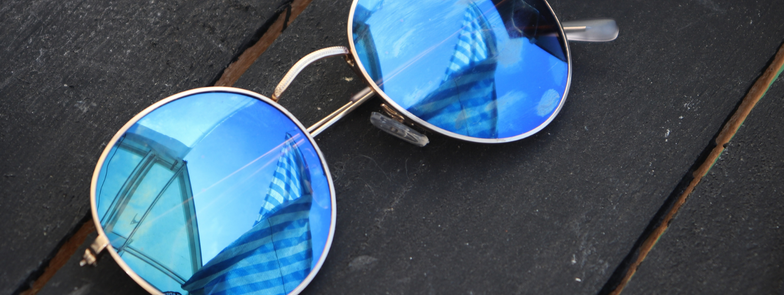
Reaching our students requires us to see our students.
If we don’t see our students, what would they not see within themselves?
Creating a reality where the magic in school exists for students starts with what we see. This vision appeared during my second year in education. After graduating from college at James Madison University (Go Dukes!) I had two choices: move back to New Jersey for a remote job or head to New Orleans with Teach For America.
I chose the latter and found myself at an elementary school called KIPP Central City Primary. Our school had a unique layout shaped like a square with an opening in the center. So in the early morning, you could catch the pink sky over the Superdome and the city.
During my second year there (I'll save the first year's stories for another post), I was an interventionist and co-teacher in first grade. They loved read-aloud books, especially those about Pete the Cat. My mother brought Pete the Cat and His Cool Blue Magic Sunglasses during one of her visits.
In this book, Pete's having a difficult time; nothing goes his way until he runs into a frog. This frog gives him a pair of cool blue magic sunglasses. He tells Pete that when he puts them on, all his problems and worries will disappear. So, Pete puts these sunglasses on, and it works! The birds are singing, the sky is bright, the sun is shining, and everything's alright.
Tragically, Pete's glasses break. He is devastated. Suddenly, a wise owl appears and gives him advice. He says, "Pete, you don't need magic sunglasses to see things in a new way. Just remember to look for the good in every day."
At that moment, tears began to well up in my eyes. It reminded me of a quote that grounds my purpose as an educator:
"I believe all educators if they are to become effective teachers of their students, need to confront tough questions about their identities and motivations; they need to think about why they do things as they do and ask if there might be a better way of reaching their students; they need to reflect on how a word gesture or an action might inspire or wound for life. Simply learning the 'tricks of the trade,' or the latest strategy or fad is not enough to keep teachers engaged and successful in their work."
-Sonia Nieto
The challenges that make me want to keep those glasses on are the tough questions about my identity and motivation, reflecting on why I do things as I do, or how a word, gesture, or action might inspire or wound a scholar for life. However, taking them off always leads to a better way of reaching them.
Reaching our students requires us to see our students. To look beyond the shade, we have to remove our sunglasses. At that moment in my educational journey, I saw Jarnell.
The first time I met Jarnell, he sat at my U-Table in August with a big smile that showed two missing front teeth. He began first grade at a Kindergarten level in all subject areas. Many teachers would describe him as "busy." Throughout the school day, you could find Jarnell flying his pencil in the air like an airplane or making tall towers with his Unifix cubes. His name was heard repeatedly as a reminder to focus and stay on task. The task of supporting him in math confronted me as his interventionist.
As his interventionist, though, Jarnell pushed me to think outside the box to make my lessons more fun and meet his needs. For example, we used a magic marker and bag of numbers to fill in our missing hundreds chart or physically ate the cookies to understand the subtraction action. If Jarnell was engaged, I knew I could pat myself on the back for lesson planning.
Soon the pencil airplane flew down on his paper to represent the strategy he used to solve with what used to be cube towers. Frequently he would say, “Ms. Luciano, the magic bag told me the number!" I consistently responded, "No, Jarnell, your brain did that, and I'm so proud of you." One day, he finally looked at me and asked, "Why do you always tell me you are so proud of me?"
In May, Jarnell stood across from me at my U-table with a big smile that showed all his teeth. This time, he held a goals sheet in front of him with a sticker in each box. He achieved mastery of both Kindergarten and first-grade math standards. I often reflect on the outcome if I had not seen Jarnell that year, but more importantly, what would he have not seen within himself?
As educators, there are days when we want to keep our cool, blue, magic sunglasses on to hide the realities in front of us. But if we want to be bold enough to discover what other educators may choose to deny, we must take them off. We must confront the difficult questions about our identities and intentions, the why behind our actions, and how even the slightest interaction might encourage or discourage a student.
I could have seen Jarnell as busy or brilliant; it all mattered whether or not I had those sunglasses on. From my perspective, Jarnell was brilliant, and his brilliance helped me discover a better way of reaching my students.
The next time you need to put those cool, blue, magic sunglasses on, I urge you to consider the following question: if we do not see a student, what would they not see within themselves?
Every afternoon to this day, I reflect during my commute home. Rarely do these reflections include how I can teach two-syllable words or place value differently. Instead, I consider my interactions with students, my words, gestures, and actions, and whether or not they inspired or wounded someone. Reaching our students requires us to see our students; to do that, we must be willing to see ourselves first.
Then, I hear the words of the wise owl reminding me again as it says, “Ms. Luciano, you don't need magic sunglasses to see things in a new way. Just remember to look for the good in every day." And the good always centers on how I will connect with my students in even better ways tomorrow.
So, when you take off your sunglasses, what do you see?

Be bold enough to discover what others choose to deny.
We precalculate every moment to meet the demands of a school day, but how often do we consider those we create it for, the students?
When I was a little girl, I loved Christmas. I loved Christmas because of the tradition behind it. And if your last name ends in a vowel, you know I love the Italian tradition behind it. From as early as I remember, I would have my best dress picked out for Christmas Eve and a pair of pajamas for later evening. We went to my Aunt Terry and Uncle Hops' house with all my cousins - first, second, third, and then some (for my Italian readers, did you also not know your uncles' first names until your 20s?).
After dinner, the cousins would change out of their Macy's ball gowns and button-downs into pajamas and wait for that knock on the door. It was, of all people, Santa, and I mean THE Santa (see picture below for proof). Every year, Santa would walk through that door and sit in my aunt and uncle's living room chair.
The children would gather around him in excitement and awe, waiting their turn to ask the one question they had thought about all year. He told us about the North Pole, the reindeer, his favorite snacks, what happens when there is no chimney, and wishes he could make on the unique cane he carried with him. Then, one by one, Santa would take out a present with each of our names. We sat anxiously, waiting for the moment it was our turn to sit on his lap.
Santa made each one of us feel valued. He looked at you like he knew you outside of this moment, and in our minds, he honestly had. A few minutes felt like a lifetime telling Santa about your school and the activities you were involved in, along with. one last wish you hoped to see under the Christmas tree.
In the years that followed, cousins who once sat on his knees, their feet not yet able to touch the ground, stood firm next to him as they shared their endeavors in college or life after. Santa watched us grow as he gave us this experience year after year. It was truly magical.
In 3rd grade, someone on the bus told me Santa wasn't real. Immediately, I told my parents, and they broke the news. I couldn't believe it like I could not, because I knew him - there was photographic evidence! And on top of that, I was not allowed to tell my younger cousins. The next day after school, I locked myself in my room and started writing about a world where Santa existed.
About a week later, I resurfaced with my first book, Believe. The main character was a grumpy girl who argued with her brother, challenged her mom, and refused to volunteer anywhere around the holidays. Until one night, she was able to visit the North Pole herself.
Are you getting Polar Express vibes already? Seeing the Polar Express heavily influenced my ideas, so I did not move forward with publishing (potential copyright issues). Either way, that grumpy girl soon recognized that Santa could exist in other ways, like how she loved her family or interacted with strangers. I could still bring an unfiltered joy to the world just like he had done for me.
At eight years old, someone on the bus told me something so magical in my world no longer existed, and my parents, people I trusted, agreed with them. At eight years old, I said no and created a reality where that magic still existed. At eight years old, I learned one of many life lessons. Be bold enough to discover what others choose to deny.
Now two decades later, I often think about the magic that can exist within a school building and the many expectations those schools create for children that often get in the way of that. As a teacher, this starts before they enter the building. We dissect every aspect of the day, thinking through pathways, systems, routines, and expectations that will ensure our classrooms function in a way that prioritizes learning.
For example, students enter in the morning and put their homework in the blue basket by the filing cabinet. Then they take their laptops from the computer cart and remember to place their lunch in the bin. After that, they focus on eating their breakfast and completing a problem in their math workbook until the timer goes off. When I hold up a 1, they will stand, two, turn, and 3, walk to the carpet in under one minute.
We precalculate every moment to meet the demands of a school day, but how often do we consider those we create it for, the students?
The memory of school for our children has been masks, Zoom, and social distancing. This way of learning has been the only classroom experience for elementary-aged students. For example, teachers introduced the concept of school to some Kindergarteners through a Chromebook!
Now, we can show our faces from under a mask, move the desks closer together, bring carpets back to our learning, and open the doors again. However, we also face the choice of returning to what was or creating what will be.
As a teacher, I know what we did before was not working. And now, it appears as though schools are returning to that. Even worse, teacher shortages, classroom sizes, academic and social-emotional gaps - the list of school needs continue to increase. Needs present problems, and problems present opportunities. So, we also have a chance to create the concept of a school that centers on our students.
At eight years old, I said no and created a reality where that magic still existed. At 28 years old, I choose to be bold enough to discover what others choose to deny. Every day I decide to make a reality where the magic of school still exists for my students. What are other educators with me?